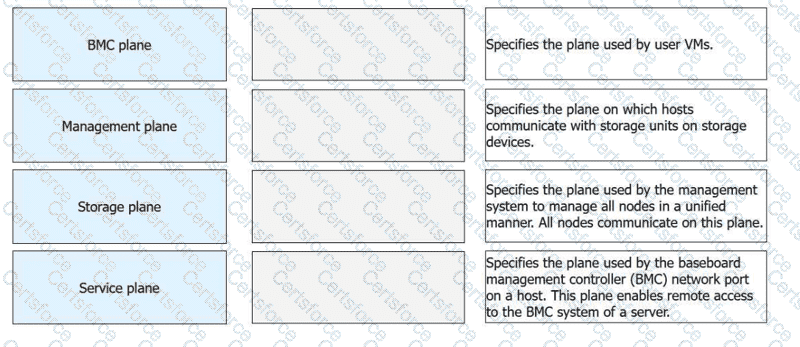
In the Huawei FusionCompute architecture, network traffic is logically divided into specialized "planes" to ensure security, isolation, and optimal performance. TheBMC plane(Baseboard Management Controller) is dedicated to hardware-level management. It utilizes a dedicated network port on the physical host toenable remote access to the BMC system, allowing administrators to perform out-of-band tasks such as power control, BIOS configuration, and hardware health monitoring regardless of the OS state.
TheManagement planeis the communication backbone for the virtualization platform. It is used by the Virtual Resource Management (VRM) and Computing Node Agent (CNA) tomanage all nodes in a unified manner. All nodes in the cluster communicate on this plane to report resource status and receive management instructions. TheStorage planeis specifically reserved for data transmission between the compute hosts and the back-end storage infrastructure. This is theplane on which hosts communicate with storage units(such as LUNs or shared folders) to handle VM disk I/O.
TheService planeis the network segmentused by user VMsfor their actual service traffic. It carries the data produced and consumed by the applications running inside the virtual machines. Huawei documentation mandates the isolation of these planes—typically via VLANs—to prevent a "broadcast storm" or high data load in one plane (like Storage) from impacting the accessibility of the Management plane or the performance of user services.
Contribute your Thoughts:
Chosen Answer:
This is a voting comment (?). You can switch to a simple comment. It is better to Upvote an existing comment if you don't have anything to add.



Submit