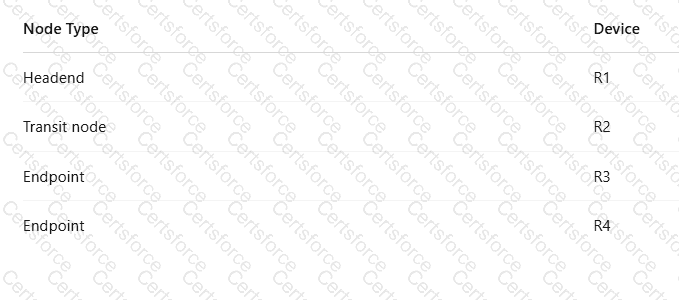
???? R1 – Headend
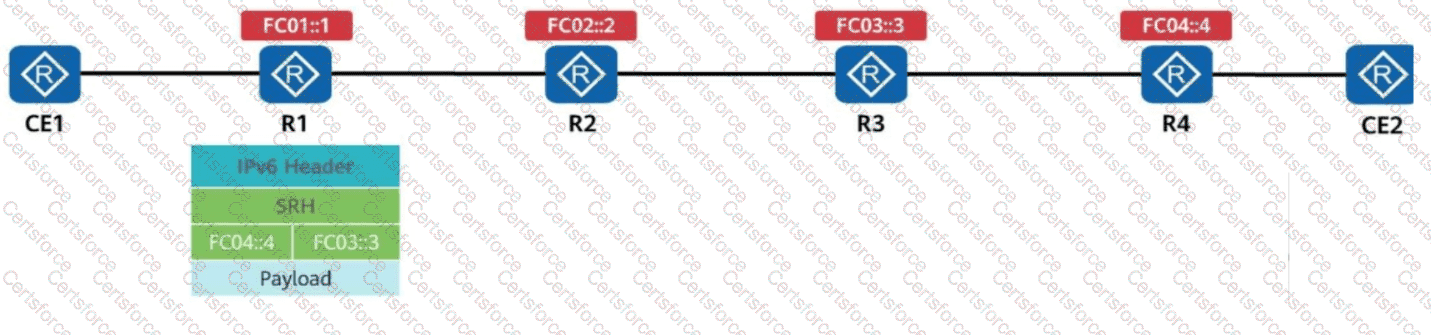
It receives a normal IPv6 packet from CE1.
It inserts the SRH (Segment Routing Header) with segment list.
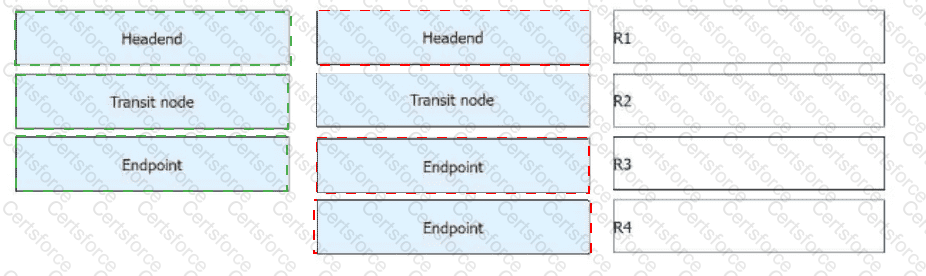
Therefore, R1 is the Headend.
Huawei Reference:
“The SRv6 headend node receives a normal IPv6 packet and inserts an SRH, becoming the source of the SR path.”
(Source: HCIE-Datacom V1.0 – SRv6 Fundamentals)
???? R2 – Transit Node
R2 simply forwards the SRv6-encapsulated packet.
It does not process any segment SID.
Hence, R2 is a Transit node.
“Transit nodes in SRv6 just forward packets based on the active segment in the IPv6 destination address without processing SRH.”
(Source: HCIE-Datacom Study Guide – SRv6 Node Roles)
???? R3 – Endpoint
The first SID in SRH is FC03::3, which belongs to R3.
R3 processes the SID, pops it, and forwards the packet to the next segment FC04::4.
Thus, R3 is an Endpoint for one segment.
???? R4 – Endpoint
The final destination SID in the SRH is FC04::4, which belongs to R4.
R4 performs the final End behavior, handling the payload.
So, R4 is also an Endpoint.


Submit