During requirements analysis and risk assessment, enterprise architects prioritize business functions and network failures according to standardized impact severity hierarchies. Aligning network redundancy, High Availability (HA) mechanisms, and Mean Time to Recovery (MTTR) service level agreements requires classifying workloads by consequence of disruption.
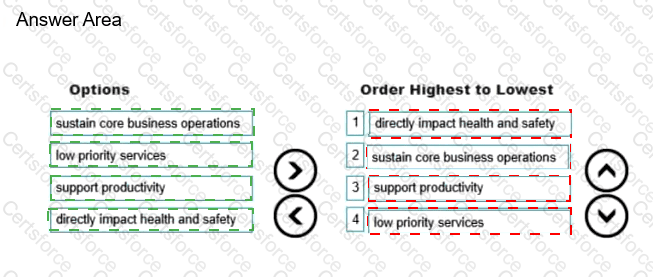
Directly impact health and safety: The highest architectural priority in any engineering standard is human life and personal physical safety. In healthcare environments (such as hospitals), industrial facilities, and emergency dispatch centers, network outages that disrupt life-support monitoring, surgical theater feeds, or hazardous telemetry represent catastrophic Severity 1 events.
Sustain core business operations: The secondary tier governs mission-critical services required for transactional operations, revenue generation, and regulatory compliance (e.g., electronic health records, financial payment gateways, primary databases).
Support productivity: The tertiary tier encompasses internal operational tools that facilitate workforce collaboration and administrative workflow (e.g., corporate email, document shares, intranet portals).
Low priority services: The lowest tier represents non-essential auxiliary workloads (e.g., guest Wi-Fi, non-production staging environments, testing lab clusters), where downtime causes negligible commercial impact.
Reference Topics: HPE Network Design Methodology – Business Impact Analysis, Workload Prioritization, and Architectural Risk Classification.
===============


Submit