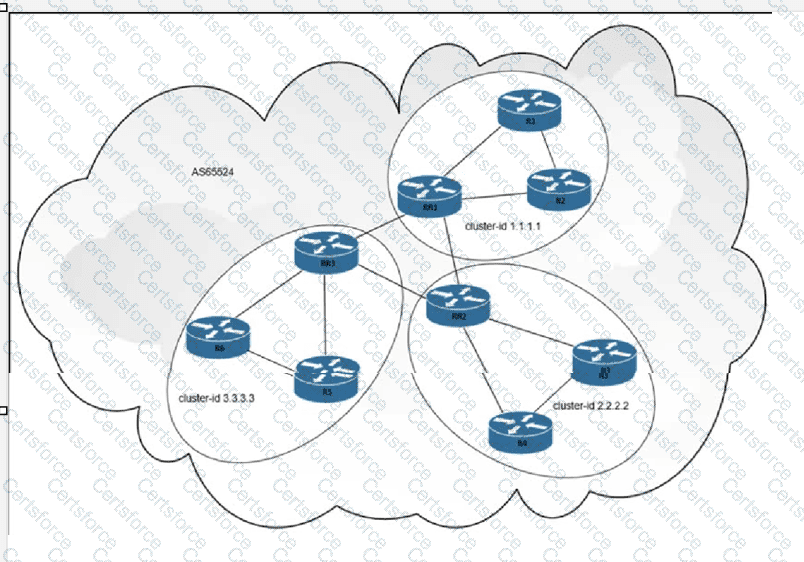
Refer to the exhibit. An architect designed a BGP routing solution to reduce the number of IBGP peerings to conserve resources. The original design had a total of 36 IBGP peerings. The new design reduces the number of peerings by how many?
The new BGP route-reflector design reduces the iBGP peerings by 27. A full-mesh iBGP design with 9 routers requires n times n minus 1 divided by 2 peerings, which equals 9 times 8 divided by 2, or 36 sessions. Route reflectors are used specifically to reduce this scaling burden. In the redesigned topology, each of the three clusters has one route reflector and two clients, which requires two client-to-reflector sessions per cluster, or six sessions total. The three route reflectors must still maintain iBGP sessions with one another as nonclient peers, which adds three more sessions. The redesigned total is therefore nine sessions. The reduction is 36 minus 9, which equals 27. This reflects the core scaling benefit of route reflectors: clients no longer need a full iBGP mesh with every other client in the autonomous system. Reference topics: BGP route reflectors, iBGP scaling, full-mesh formula, route-reflector clients, nonclient peering.
Contribute your Thoughts:
Chosen Answer:
This is a voting comment (?). You can switch to a simple comment. It is better to Upvote an existing comment if you don't have anything to add.


Submit