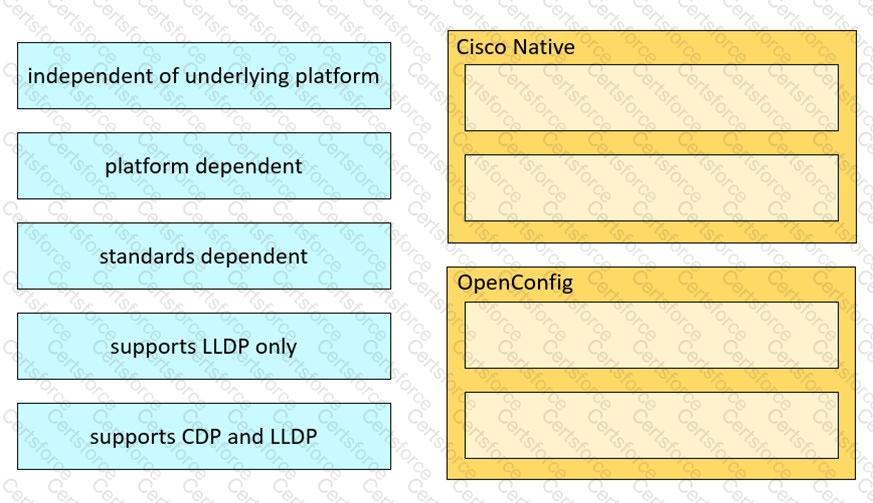
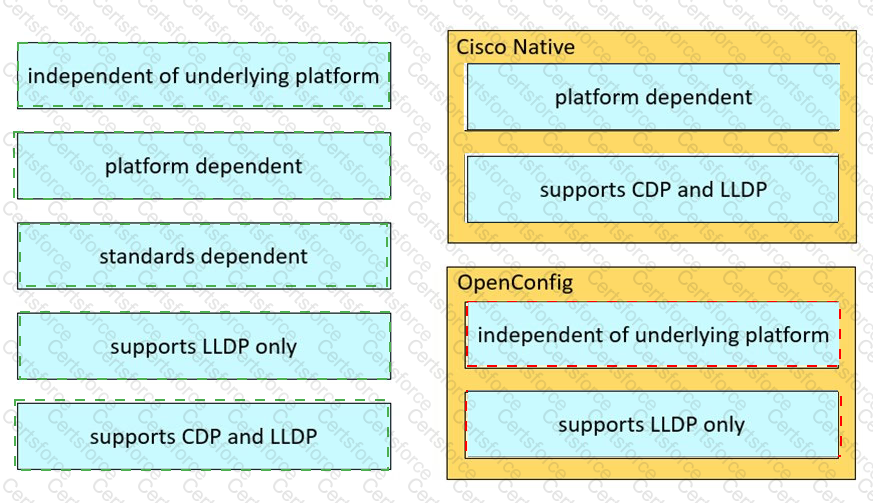
This YANG mapping is based on how IETF, OpenConfig, and Cisco native models differ in portability and schema organization. IETF models are produced through the standards process and are appropriate when the same management structure is expected across vendors for common protocols. OpenConfig models are also vendor-neutral, but they are built around a consistent operational model used heavily for streaming telemetry and multivendor automation. Cisco native models mirror Cisco platform configuration more closely and expose device-specific capabilities that may not exist in common models. The selected answers keep those boundaries clear. This matters because a NETCONF or RESTCONF payload is validated against the YANG schema; a payload written for one model family cannot be assumed to work against another. In design terms, the model family should be selected after confirming device software release support, feature coverage, operational-state requirements, and vendor diversity. Open models give portability; native models give feature completeness. Reference topics: IETF YANG, OpenConfig YANG, Cisco native YANG, schema validation, automation model selection.
Contribute your Thoughts:
Chosen Answer:
This is a voting comment (?). You can switch to a simple comment. It is better to Upvote an existing comment if you don't have anything to add.


Submit