Correct Answer: D. SFP
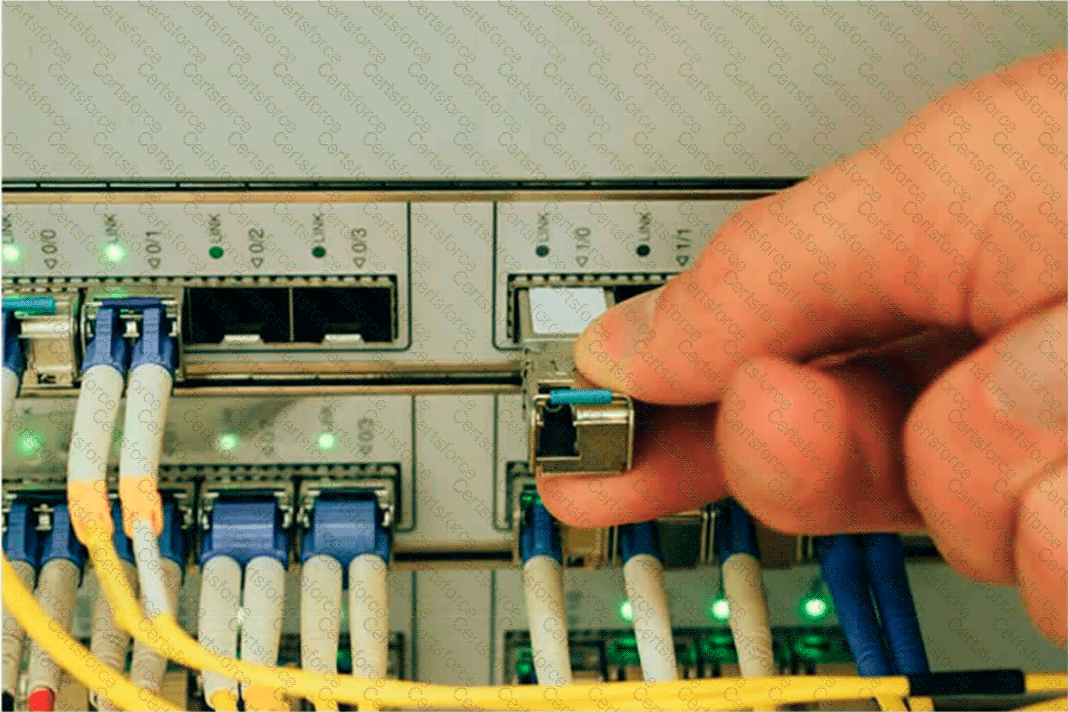
The image illustrates the installation of a Small Form-Factor Pluggable (SFP) transceiver module into a compatible network interface.
SFP technology provides modular network connectivity, enabling administrators to select appropriate transceiver types based on transmission media, supported data rates, and communication distance.
An SFP transceiver is a compact, hot-swappable interface module that connects networking equipment to optical-fiber or copper Ethernet infrastructure.
The photograph shows a removable metallic transceiver being inserted into an SFP-compatible port. The surrounding connections also illustrate fiber-optic network cabling.
SFP modules commonly support Gigabit Ethernet, while enhanced SFP+ modules typically support 10-Gigabit Ethernet connectivity.
Why the other options are incorrect:
A. PoE: Power over Ethernet provides electrical power and data over supported Ethernet cabling. It is not the removable transceiver interface shown.
B. USB: Universal Serial Bus provides peripheral connectivity and uses different connector designs.
C. Serial: Serial interfaces support sequential data transmission and are commonly associated with console management or legacy WAN connections.
D. SFP: Provides modular, replaceable network interfaces for supported fiber-optic and copper connections.
Therefore, Option D correctly identifies the interface technology shown in the exhibit. Cisco ' s SFP installation documentation confirms the modular and hot-swappable characteristics of these transceivers.
[References:, Cisco Certified Support Technician Networking (100-150) — Network Infrastructure, Network Connections and Interface Types., Cisco, SFP and SFP+ Transceiver Module Installation Notes., Cisco, 4000 Series Integrated Services Routers — Interfaces and Modules., , , ]


Submit